Nikola Tesla: Powering the Modern World
From the War of the Currents to Niagara Falls, Tesla’s alternating current helped build the electrical age.
Introduction
In the late 1800s, electricity was not yet a quiet utility humming behind walls. It was spectacle, danger, and promise—an invention still fighting for its final form. Cities argued over which current should power their streets. Investors gambled on systems that might fail. Newspapers turned engineers into celebrities and villains. Into that world stepped Nikola Tesla, an immigrant inventor with a talent for vivid demonstrations and a mind tuned to invisible forces.
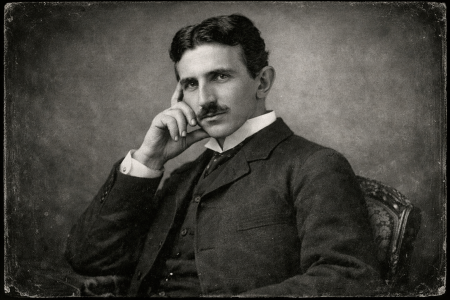
Tesla’s most consequential contribution was not a single gadget, but a system: the modern alternating current (AC) framework that made it practical to generate power far from where it is used, transmit it efficiently, then step it down for homes and factories. Along the way, he developed breakthroughs like the induction motor, inspired the high-voltage drama of the Tesla coil, and pursued a controversial dream of wireless power. This is the story of how Nikola Tesla helped electrify the Modern Age—and why his legacy still sparks debate, admiration, and myth.
Fast Facts: Nikola Tesla in the Modern Age
-
System-builder, not just inventor:
Tesla’s greatest impact came from shaping the modern AC power system—a framework that makes regional grids possible.
-
The induction motor changed industry:
By using a rotating magnetic field, Tesla helped create durable motors well-suited for factories and infrastructure.
-
War of the Currents was also a PR war:
Arguments about safety and efficiency were amplified through public demonstrations, headlines, and political pressure.
-
Niagara Falls became a turning point:
Large-scale generation and long-distance transmission helped establish AC as the dominant model for electrification.
-
Tesla coil: tool and icon:
The Tesla coil helped Tesla explore resonance and high-frequency electricity—and remains a symbol of the “electric wizard” image.
-
Wireless power remains contested:
Tesla’s ambitions inspired future research, but his strongest historical legacy rests on the practical AC grid.
From Empire to Innovation: Early Life and a Builder’s Mind
Nikola Tesla was born in 1856 in Smiljan, in a region where languages, borders, and loyalties overlapped. He grew up in an age of steam engines, telegraph wires, and accelerating industrial change. Electricity existed mostly as a scientific curiosity and a laboratory phenomenon—a crackle of promise rather than a dependable infrastructure.
Tesla trained in engineering and absorbed the new science of electromagnetism. Yet his talent was not only technical. He could imagine machines in motion with unusual clarity, rehearsing designs mentally before committing them to metal. Later, he would describe visions of rotating magnetic fields—an image that would become central to his most important work.
Idea in one line: If you can make a magnetic field rotate, you can make a motor turn—reliably, efficiently, and at scale.
New York, Edison, and the Break That Changed Everything
Tesla arrived in the United States in 1884, entering a country that was rapidly building its modern identity. (If you want context for how political revolutions helped reshape modern states, see The French Revolution: Terror and the Making of Modern Europe.) In New York, Tesla found work connected to Thomas Edison’s electrical enterprises. Edison’s world favored direct current (DC) networks: practical for short distances, but difficult to expand without major losses.
The partnership did not last. Tesla wanted to pursue AC ideas that required different engineering assumptions, different hardware, and different business models. He left, endured financial hardship, and then re-emerged with a set of inventions that would become the heart of modern power grids.
The Breakthrough: Rotating Magnetic Fields and the Induction Motor
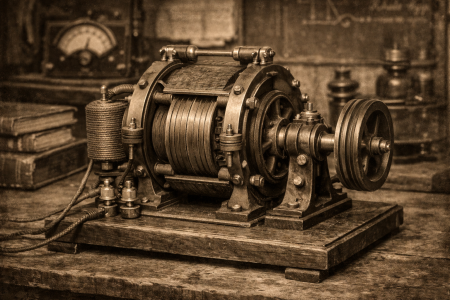
Tesla’s signature insight was the rotating magnetic field. Instead of forcing electricity through a motor in a way that required brushes and commutators (parts that wear out and spark), Tesla envisioned a motor where alternating currents create a rotating field that pulls the rotor along.
The result was the induction motor—robust, efficient, and well-suited for factories. It was also a proof that AC was more than a theory. It could run the machines that powered industrial society.
| Concept | What It Does | Why It Matters | Modern Example |
|---|---|---|---|
| Rotating magnetic field | Creates continuous magnetic rotation using AC phases | Enables smooth motor motion without heavy sparking | Industrial motors, pumps, compressors |
| Induction motor | Turns electrical energy into motion via induction | Durable, scalable, and efficient for factories | Fans, elevators, appliances, manufacturing |
| Polyphase AC system | Uses multiple AC phases for stability and power | Supports long-distance transmission and heavy loads | Modern grids and high-voltage lines |
War of the Currents: Tesla vs Edison and the Fight for the Grid
The War of the Currents was part engineering dispute, part business rivalry, and part public relations war. Edison’s allies argued that DC was safer and more controllable. Westinghouse and Tesla pushed AC as the only realistic path to electrifying large regions.
Why is alternating current better than direct current?
The short answer is distance. Electricity loses energy as heat when transmitted. AC makes it easy to change voltage using transformers: send power long distances at very high voltage (lower current, fewer losses), then step it down near where people use it. Early DC networks struggled to do this efficiently, so they needed generating stations close to customers—a constraint that made large-scale electrification harder.
| Feature | AC Power System | DC Power System |
|---|---|---|
| Voltage conversion | Easy with transformers | Historically difficult (especially in the 1880s–1890s) |
| Long-distance transmission | Efficient at high voltage | Limited without frequent stations |
| Early motor design | Tesla’s induction motor excelled | Common in early commutator motors |
| Outcome | Becomes the backbone of modern grids | Remains crucial in electronics and batteries |
The rivalry was not purely technical. It was also about contracts, patents, and fear. Safety arguments were amplified for public effect. Demonstrations could look like magic or menace depending on who was narrating. The public did not just watch a technological contest—it watched the future being negotiated in real time.
George Westinghouse and the Business of Making AC Real
Tesla needed a partner who could manufacture hardware, win contracts, and install systems at scale. That partner was George Westinghouse, an industrialist who saw that Tesla’s patents could be the foundation of a new electrical economy.
Westinghouse didn’t just buy ideas—he built institutions around them. In the Modern Age, invention was becoming inseparable from industry: laboratories, factories, and financial networks turned breakthroughs into infrastructure. (For an earlier revolution in information technology, see The Printing Press and the Birth of the Modern World.)
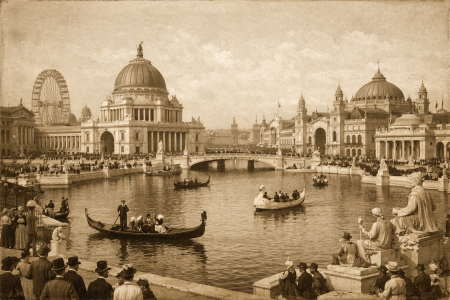
A City of Light: The 1893 Chicago World’s Fair
At the 1893 World’s Columbian Exposition in Chicago, visitors entered a landscape that felt like tomorrow: grand buildings, modern machinery, and electric light displayed as a symbol of progress. Westinghouse’s AC system, built on Tesla’s work, helped transform electricity into a public experience.
Tesla, famous for showmanship, used demonstrations to make invisible forces feel real. High-frequency currents could illuminate lamps without wires in staged conditions, suggesting new possibilities. The event was marketing, yes—but it was also cultural. Electricity was becoming part of modern identity: a promise of speed, cleanliness, and control over nature.
Niagara Falls: The Proof That Changed the World
If the Chicago fair was a spectacle, Niagara Falls was the verdict. Harnessing Niagara meant more than building a power plant. It meant proving that AC could generate enormous power, transmit it reliably, and deliver it to distant cities. The project became one of the defining engineering achievements of the era.
When power from Niagara reached industrial users and then Buffalo, the argument for AC became difficult to ignore. The modern grid—regional generation feeding faraway demand—was no longer a dream. It was operating hardware. In that sense, Tesla did not merely win a rivalry. He helped set a standard that shaped electrification across continents.
The Grid Logic
The AC model scales by geography: generate where energy is abundant (water, coal, later gas and renewables), transmit long distances at high voltage, then distribute locally at safer levels. This basic logic remains recognizable in today’s electrical infrastructure.
High Voltage and High Drama: The Tesla Coil
Tesla was not satisfied with practical power systems alone. He pushed into high-frequency electricity, resonant circuits, and spectacular discharges that became iconic. The Tesla coil was both a tool and a symbol—useful in experiments, and unforgettable in demonstrations.
How does the Tesla coil work?
A Tesla coil is essentially a resonant transformer: a primary circuit rapidly switches current through a coil, creating a changing magnetic field that induces a very high voltage in a secondary coil. When tuned to resonance, the system can produce dramatic high-voltage outputs—sparks, arcs, and the ability (in controlled setups) to energize certain lamps without direct wires. The coil became part of Tesla’s experimental toolkit as he explored frequency, resonance, and wireless transmission.
Wireless Power and Wardenclyffe: Genius, Ambition, and Limits
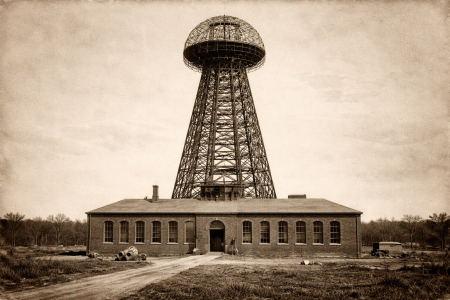
Tesla’s later career is where engineering history and legend intertwine. He envisioned global wireless communication and, more controversially, global wireless electricity. His Wardenclyffe project on Long Island was designed as an experimental station that could transmit signals across the Atlantic—and perhaps power as well.
The vision was grand, but reality was harsh. Wardenclyffe required enormous funding, and the economics of early wireless were shifting quickly. Competing systems, changing investor confidence, and the sheer difficulty of the engineering challenge undermined the project. Wardenclyffe became a monument to a Modern Age truth: innovation does not live on ideas alone—it survives on resources, timing, and institutional support.
Legend vs fact: Tesla’s wireless ambitions were real, but many popular claims about “free energy for the whole world” flatten the technical and financial obstacles that stopped Wardenclyffe.
Colorado Springs: Where Tesla Chased Thunder
In 1899, Tesla worked in Colorado Springs, conducting experiments that pushed voltage and scale. The setting fed his reputation: a solitary inventor in a wide landscape, building coils that crackled like storms. These tests deepened Tesla’s interest in resonance, grounding, and the possibility of transmitting energy through the Earth itself. Even when claims grew larger than proof, the experiments contributed to the mythology that still surrounds him.
Electricity and the Modern Networked World
Electrification reshaped more than lighting and motors. It accelerated communication, industry, and the rhythm of daily life. In the same modern surge that built power grids, inventors and companies pushed new ways to connect voices across distance. For the communications side of the Modern Age story, see The Telephone: Invention and Global Impact.
Tesla appears in this broader narrative as both a practical system-builder and a dreamer. He helped provide the stable power that modern communication requires, even when his own wireless ambitions ran ahead of what could be funded or engineered at the time.
Timeline: Key Events in Tesla’s Electrical Age
| Year | Event | Why It Matters |
|---|---|---|
| 1856 | Tesla is born in Smiljan | Begins a life that will intersect with the rise of industrial electrification |
| 1884 | Moves to New York City | Enters the center of American electrical innovation and investment |
| 1887–1888 | Rotating magnetic field / induction motor breakthroughs | Core technology for AC machinery and industrial motors |
| 1888 | Westinghouse backs Tesla’s AC patents | Business scale meets engineering insight |
| 1893 | Chicago World’s Fair showcases AC power | AC becomes a public symbol of modern progress |
| 1895–1896 | Niagara Falls power transmission proves AC at scale | Large-scale electrification becomes practical and persuasive |
| 1899 | Colorado Springs experiments | High-voltage research intensifies Tesla’s wireless ambitions |
| 1901–1905 | Wardenclyffe constructed | A bold attempt at long-distance wireless communication and power |
| 1943 | Tesla dies in New York City | Legacy grows after his lifetime, mixing fact, admiration, and myth |
Later Years: Fame, Isolation, and a Complicated Reputation
Tesla lived long enough to see electricity become ordinary. Yet his later life often seemed out of step with the new corporate research culture that was replacing lone-inventor hero stories. He remained a magnetic public figure, but struggled to secure consistent funding for projects as ambitious as his imagination.
After his death in 1943, Tesla’s reputation expanded dramatically. Biographies, documentaries, and popular culture elevated him as an emblem of brilliant innovation. At times, admiration became exaggeration: stories that portray him as the solitary source of all modern technology obscure the collaborative, industrial nature of the era. Tesla was extraordinary—but so was the ecosystem that turned extraordinary ideas into power lines, substations, and machines.
Conclusion: The Power of a Modern World
Nikola Tesla’s name is now shorthand for inventive brilliance, but the true measure of his influence is quieter: the steady reliability of modern power. Every time a transformer steps voltage up for long transmission and back down for safe use, the logic of Tesla’s AC vision is at work. Every time an induction motor turns in a factory, elevator, or appliance, his ideas echo.
Tesla also represents a recurring Modern Age tension—between what can be imagined and what can be built. He chased wireless power with a faith that often exceeded budgets and physics. Yet even where his dreams exceeded his era, they helped define its horizons. Tesla did not merely light bulbs. He helped power the modern world.
Nikola Tesla — Frequently Asked Questions
What did Nikola Tesla invent?
Tesla contributed key inventions and system designs behind the modern AC power framework, including the rotating magnetic field, the induction motor, and major elements of polyphase transmission. He also developed devices used for high-voltage experiments, most famously the Tesla coil.
Why is alternating current (AC) better than direct current (DC) for power grids?
Historically, AC made it much easier to transform voltage for efficient long-distance transmission, then reduce it for local distribution. That ability helped grids expand beyond short, dense urban networks and enabled regional electrification.
Was Tesla really rivals with Thomas Edison?
Tesla and Edison did work in the same industry and clashed over technical direction and business strategy, especially during the War of the Currents. But the rivalry is often simplified in pop culture. The conflict involved many companies, engineers, and public campaigns—not only two personalities.
How does the Tesla coil work?
A Tesla coil uses resonance and electromagnetic induction to generate very high voltages in a secondary coil. When tuned properly, it can produce dramatic discharges and is useful for studying high-frequency electrical effects.
Did Tesla invent wireless power?
Tesla pursued wireless transmission ideas and built Wardenclyffe to explore them. His work influenced later thinking, but the concept of powering the world wirelessly faced enormous practical barriers. Modern wireless power exists in limited forms (like short-range charging), not as Tesla imagined.
Why is Tesla so associated with myths and “lost inventions”?
Tesla’s dramatic demonstrations, ambitious claims, and unfinished projects created fertile ground for legends. Over time, real achievements blended with speculation. The strongest historical evidence supports his central role in AC power systems and motor technology, while many “secret weapon” stories remain unverified.
Sources & References
- W. Bernard Carlson, Tesla: Inventor of the Electrical Age (Princeton University Press, 2013).
- Margaret Cheney, Tesla: Man Out of Time (Simon & Schuster, updated ed.).
- Marc J. Seifer, Wizard: The Life and Times of Nikola Tesla (Citadel Press, revised ed.).
- Encyclopaedia Britannica, “Nikola Tesla” (biography overview).
- PBS, Tesla: Master of Lightning (Niagara and Wardenclyffe companion materials).
- Tesla Science Center at Wardenclyffe, historical pages on Wardenclyffe and the Columbian Exposition.
- National Historic Landmark and local history resources on the Niagara (Adams) power plant and early AC infrastructure.
More Articles