Boudica: The Celtic Queen Who Led a Rebellion Against Rome
Exploring her uprising, battles, and enduring legacy.
Introduction: Who Was Boudica?
In the early 60s CE, Roman Britain was shaken by a rebellion so violent that entire towns were burned and tens of thousands of people were killed. At its head stood Boudica — often spelled Boadicea in later tradition — a Celtic queen of the Iceni tribe. Today she is remembered as Boudica Celtic queen who led a rebellion against Rome, a symbol of resistance whose story sits somewhere between history and legend.
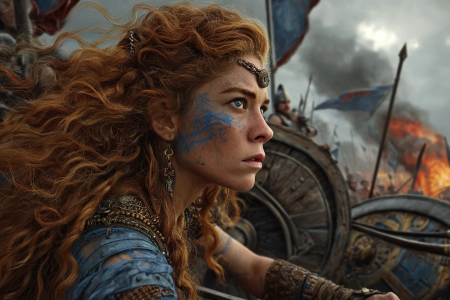
The Boudica revolt, or Boudica uprising, was not just a sudden outburst of rage. It grew from years of tension between native tribes and Roman rule in Britain, from legal disputes and financial pressure, and from one brutal act of humiliation against Boudica and her daughters. This article offers a clear Boudica rebellion summary — from the background of Roman Britain to the causes, battles, and long-term legacy of Boudica in British history.
Roman Britain and the Iceni: Setting the Stage
Rome invaded Britain in 43 CE under Emperor Claudius, turning much of the island into a new province. Some tribes were conquered outright; others, like the Iceni tribe in what is now East Anglia, were allowed to remain semi-independent as client kingdoms. Their king, Prasutagus, ruled as a loyal ally of Rome, paying tribute while keeping local power among his own people.
This arrangement created an uneasy balance. Roman officials, tax collectors, and financiers expected profit, while Celtic elites tried to protect their lands and traditions. In other regions, resistance to Rome would later erupt into open conflict, as seen in the Dacian Wars led by Decebalus, another frontier leader who fought to keep his kingdom independent from imperial control.
For a time, however, the Iceni avoided major conflict. Prasutagus’s wealth and status, and his connections to Roman power, helped shield his kingdom from the harshest forms of provincial rule. That fragile stability ended with his death.
Why Did Boudica Rebel Against Rome?
When Prasutagus died around 60 CE, he reportedly left a will that divided his kingdom between his two daughters and the Roman emperor Nero. This was a typical way for a client king to show loyalty and protect his family. Instead, Roman authorities treated his death as an opportunity to seize everything. Imperial officials and lenders moved in, claiming Iceni lands and demanding repayment of loans and “gifts” extended under Roman rule.
According to the Roman historian Tacitus, the Romans confiscated property, enslaved members of the royal household, and publicly humiliated the queen. Boudica was flogged, and her daughters were raped by Roman soldiers or officials. For a proud royal dynasty and its followers, this was more than a personal tragedy: it was a political and religious outrage.
Key Causes of Boudica’s Revolt in Roman Britain
- Violation of Prasutagus’s will: Roman officials ignored the agreement that was meant to share power and protect the Iceni royal line.
- Abuse of Boudica and her daughters: Flogging the queen and assaulting her children broke social, moral, and religious norms, fueling anger across Celtic communities.
- Financial exploitation: Heavy debts, aggressive tax collection, and confiscation of land stirred resentment among both elites and ordinary tribespeople.
- Pressure on tribal identity: Romanisation, new laws, and veteran colonies threatened traditional Celtic society, adding cultural pressure to economic and political grievances.
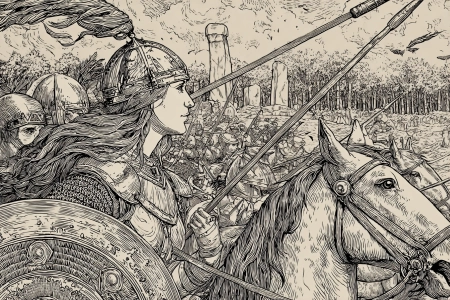
Together, these forces helped transform anger into organised resistance. Boudica and the Iceni were joined by other tribes, especially the Trinovantes, turning a local protest into a broad Roman Britain rebellion.
Boudica’s Revolt in Roman Britain, 60–61 CE
At the time the uprising began, the Roman governor Gaius Suetonius Paulinus was campaigning in the west, attacking the island of Mona (Anglesey), a stronghold of the druids. His absence left southern and eastern Britain exposed. Boudica seized the moment.
The Fall of Camulodunum (Colchester)
The rebels’ first target was Camulodunum (modern Colchester), a former tribal capital turned Roman colonia, home to retired legionaries and a temple dedicated to the deified Emperor Claudius. To many Britons, the town symbolised Roman domination: foreign veterans on confiscated land and a cult demanding loyalty to Rome’s rulers.
Boudica’s forces overwhelmed the lightly defended settlement. The temple became a besieged last stand before it too fell. Archaeology in Colchester has uncovered a layer of burned destruction dating to this period, confirming the ferocity of the attack.
Londinium and Verulamium Burn
After destroying Camulodunum, the rebels marched on Londinium (London), a fast-growing commercial hub. Suetonius Paulinus hurried back from the west with a small force, but he judged that he could not defend the town against the vast rebel army. He evacuated those who could leave and abandoned the rest.
Boudica’s army entered Londinium and destroyed it, killing inhabitants who remained behind. A similar fate befell Verulamium (modern St Albans). Ancient sources claim that between 70,000 and 80,000 people died in these attacks, including both Roman colonists and local allies of Rome. Excavations in London and St Albans reveal thick layers of burnt debris from around 60–61 CE, a striking material echo of the written accounts.
The Battle of Watling Street
While Boudica’s forces moved through southeastern Britain, Suetonius gathered what troops he could: legionaries, auxiliaries, and cavalry drawn from scattered garrisons. He chose a battlefield along a narrow route often identified with Watling Street, where Roman discipline and equipment could neutralise the rebels’ superior numbers.
According to Roman accounts, Boudica’s army brought families and wagons to watch the victory they expected. Instead, their crowded position and lack of manoeuvring space turned against them. The Romans held firm in the initial clash, then counterattacked in a disciplined advance that drove the Britons back against their own wagons.
Tacitus reports that around 80,000 Britons were killed, compared to only about 400 Romans — numbers that almost certainly exaggerate the disparity but still highlight how effective a trained, heavily armoured army could be against a large but poorly coordinated force.
| Year | Event | Location |
|---|---|---|
| c. 60 CE | Death of Prasutagus; Roman seizure of Iceni lands; Boudica flogged and her daughters assaulted. | Iceni territory (East Anglia) |
| 60 CE | Boudica Celtic queen leads revolt; destruction of Camulodunum and its temple to Claudius. | Camulodunum (Colchester) |
| 60–61 CE | Londinium and Verulamium evacuated or destroyed; large civilian casualties. | Londinium (London), Verulamium (St Albans) |
| 61 CE | Roman victory at the Battle of Watling Street under Suetonius Paulinus; Boudica’s revolt crushed. | Probable section of Watling Street in central/southern Britain |
Nero, Suetonius, and Rome’s Response
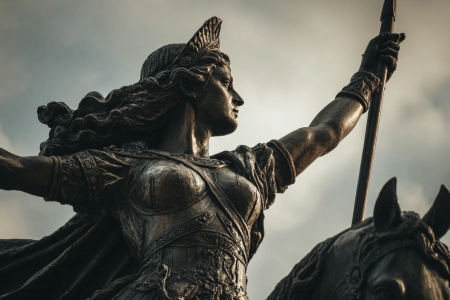
News of the uprising and the destruction of major towns reached Emperor Nero in Rome. The scale of the disaster reportedly alarmed him so much that he briefly considered abandoning the province of Britain altogether. Instead, he reinforced the army and kept Suetonius in command long enough to secure the victory at Watling Street, before eventually replacing him with a more moderate governor.
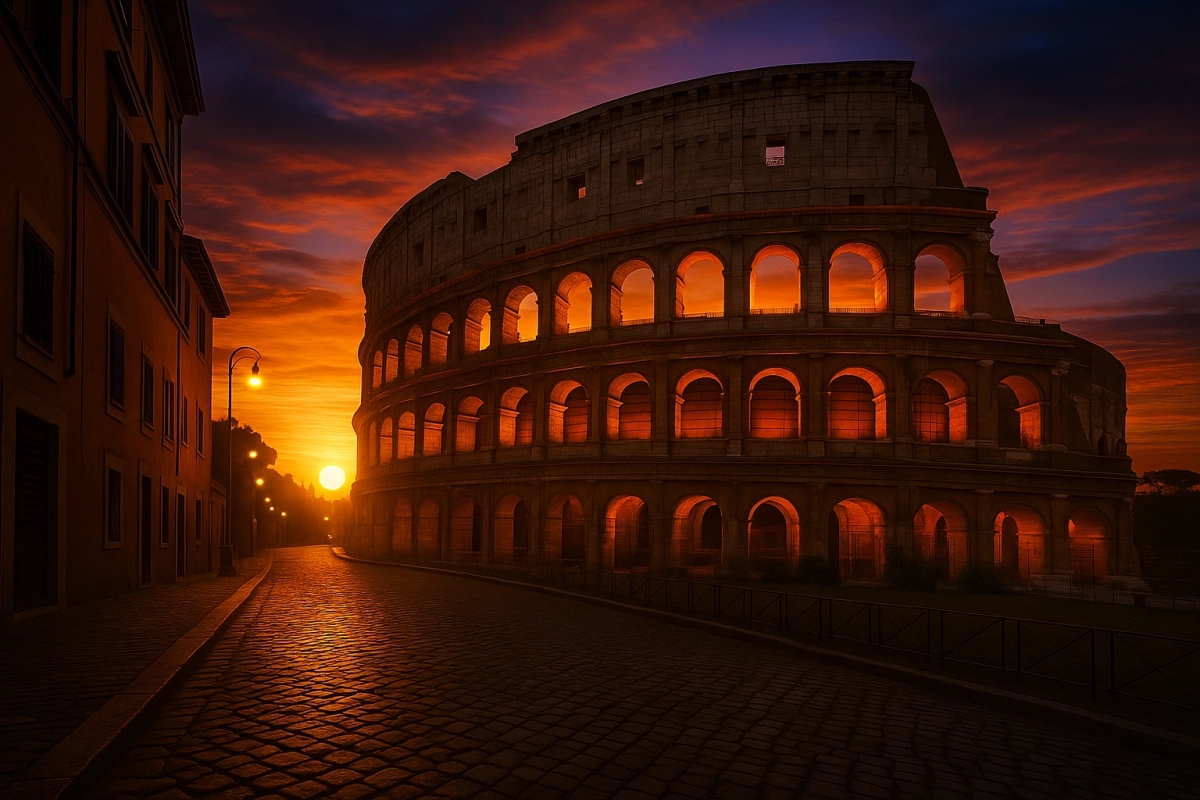
After the revolt, Roman policy in Britain shifted. There was still firm military control, but some officials sought to avoid the kind of heavy-handed behaviour that had provoked the rebellion. The province remained part of the empire for centuries, its cities and infrastructure later represented by monuments like the Roman Colosseum, an arena of blood, glory, and empire, built at the heart of imperial power.
How Did Boudica Die? Ancient Sources and Legends
One of the most frequently asked questions is simply: who was Boudica and how did she die? Ironically, almost everything we know about her comes from the very empire she fought. The main accounts are by two Roman historians: Tacitus and Cassius Dio.
Tacitus, whose father-in-law served in Britain, says that after her defeat Boudica took poison rather than be captured. Cassius Dio, writing later, claims she fell ill and died, receiving a grand burial by her people. No archaeological discovery has identified her grave, and later theories about her burial — including a popular suggestion that she lies beneath a modern railway station in London — remain speculative rather than proven.
Later centuries reshaped Queen Boudica into a near-mythic figure. Victorian Britain in particular embraced her as a national heroine, erecting a famous statue of Boudica and her daughters in a chariot near Westminster Bridge. As with other figures where history and legend blend — such as Joan of Arc or Elizabeth Báthory — it can be difficult to untangle fact from later storytelling.
Fast Facts: Boudica and the Iceni
-
Moniker:
Rebel Queen of the Iceni, later romanticised as “Warrior Queen”.
-
Period:
Active during the revolt of 60–61 CE; exact birth and death dates unknown.
-
Tribe:
Iceni, a Celtic people of eastern Britain (modern Norfolk and surrounding areas).
-
Main opponents:
The Roman Empire under Emperor Nero, represented in Britain by Governor Suetonius Paulinus and procurator Catus Decianus.
-
Key targets:
Destruction of Camulodunum, Londinium, and Verulamium during the Boudica revolt.
-
Sources:
Known only from Roman writers (primarily Tacitus and Cassius Dio); no native Brittonic accounts survive.
Legacy of Boudica in British History
For Rome, Boudica’s uprising was a warning about the dangers of misrule on the empire’s edges. For later generations in Britain, she became a symbol of resistance against foreign domination. Her story has been retold in chronicles, poems, novels, and films, each reflecting the concerns of its own era.
In the early modern and Victorian periods, Boudica was celebrated as a patriotic ancestor — sometimes even presented as a kind of proto-queen of England. In the twentieth and twenty-first centuries, she has been reinterpreted again, now appearing in discussions of women in warfare, colonialism and resistance, and the way empires record their enemies.
The history of Boudica also invites comparison with other fierce opponents of Rome and with later movements of resistance and rebellion. On History Prime, she stands alongside figures like Caligula, Rome’s notorious ruler, and frontier leaders like Decebalus, as part of a wider story of how power, violence, and resistance shaped the ancient world.
Conclusion: Between History and Legend
Boudica’s life is only dimly visible through hostile Roman texts and the burnt layers of destroyed towns, yet those traces reveal a dramatic confrontation between a provincial people and a global empire. As Boudica Celtic queen, she led one of the greatest uprisings Rome ever faced in Britain, leaving a mark far beyond the brief years of 60–61 CE.
Whether we view her as a tragic queen, a ruthless war leader, or a national heroine, Boudica forces us to confront the costs of conquest and the power of resistance. Her rebellion sits alongside other dark and turbulent chapters of the past, from the brutal spectacles of the Roman arena to later episodes explored in the Inquisition and the Black Death unleashed across Europe. In each case, history reminds us that empires rise and fall, but stories of courage, suffering, and defiance endure.
Frequently Asked Questions About Boudica
Who was Boudica?
Boudica was a Celtic queen of the Iceni tribe in eastern Britain who led a major uprising against Rome around 60–61 CE. Known today by spellings such as Boudica and Boadicea, she is one of the most famous figures in the history of Roman Britain and is often remembered as Boudica the Celtic queen who led a rebellion against Rome.
Why did Boudica rebel against Rome?
Boudica rebelled after Roman officials ignored her husband Prasutagus’s will, seized Iceni lands, and violently humiliated the royal family. She was flogged, her daughters were assaulted, and many of her relatives were enslaved. Combined with heavy debts and pressure on tribal traditions, these abuses became the key causes of Boudica’s rebellion.
What were the main battles of the Boudica uprising?
The Boudica battles against Rome included the destruction of Camulodunum, followed by the burning of Londinium and Verulamium. The revolt ended with the Roman victory at the Battle of Watling Street, where Governor Suetonius Paulinus defeated Boudica’s much larger force.
How did Boudica die?
Ancient sources disagree. Tacitus says that after her defeat Boudica took poison to avoid capture, while Cassius Dio claims she fell ill and died soon after the final battle. No confirmed burial site has been found, so the exact circumstances of her death remain uncertain.
What is Boudica’s legacy today?
Boudica’s legacy in British history is that of a powerful symbol of resistance to oppression. She appears in school curricula, public monuments, documentaries, and historical fiction. Her story invites modern readers to think critically about empire, rebellion, and how history is written by both conquerors and the conquered.
Sources & References
- Tacitus, Annals and Agricola, in J. B. Rives (trans.), Tacitus: Histories, Annals, Agricola (Penguin Classics, various editions).
- Cassius Dio, Roman History, Book LXII, in E. Cary (trans.), Dio Cassius: Roman History (Loeb Classical Library, 1914–1927).
- Miranda Aldhouse-Green, Boudica Britannia: Rebel, War-Leader and Queen (Pearson Longman, 2006).
- Richard Hingley & Christina Unwin, Boudica: Iron Age Warrior Queen (Hambledon Continuum, 2005).
- Brian Jones, The Emperor Domitian (Routledge, 1992) — contextual material on imperial rule and provincial revolts in the Roman Empire.
- Educational and exhibition materials from institutions such as the British Museum, the Museum of London, and English Heritage on Boudica, the Iceni tribe, and the archaeology of Roman Britain.
More Articles