Ivan the Terrible: Power, Paranoia, and Bloodshed
Ivan the Terrible dark history explored.
Introduction: Inside Ivan the Terrible’s Dark History
Few rulers embody dark history as completely as Ivan IV of Russia, remembered to this day as Ivan the Terrible. To some, he was a visionary reformer who modernized Muscovy, conquered enemy khanates, and laid the foundations for Tsarist Russia. To others, he was a paranoid tyrant whose reign plunged his country into terror, famine, and war.
This article explores Ivan the Terrible dark history from both angles: the young ruler who tried to strengthen the state and the later tsar whose suspicions and cruelty unleashed waves of bloodshed. Along the way, we will see how his rule fits into a broader pattern of extreme power and violence, similar to other grim episodes explored in History Prime’s Dark History articles on the Black Death and the Inquisition.
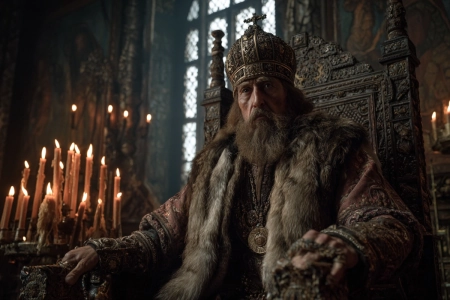
For horror fans and history enthusiasts alike, Ivan’s story raises uncomfortable questions: Why was Ivan the Terrible so feared? And what happens when absolute power is fused with deep personal instability, war, and religious certainty?
Orphaned Prince: Violence in Ivan’s Childhood
Ivan IV was born in 1530 into the ruling Rurikid dynasty, the traditional princes of Muscovy. His father, Grand Prince Vasili III, died when Ivan was only three. His mother, Elena Glinskaya, ruled as regent but died suddenly in 1538, likely poisoned. Ivan’s earliest memories were not of royal security, but of court intrigue and brutality.
In the power vacuum that followed, rival noble clans (boyars) fought for control of the throne. According to later chronicles, young Ivan watched as powerful boyars insulted and abused him, even beating him and forcing him to beg for basic necessities. Violence and humiliation became woven into his image of politics.
When Ivan later gained full power, he would turn those childhood experiences outward. The boyars he feared as a child became the enemies he would terrorize as tsar. This psychological arc—from abused child to domineering ruler—is central to any Ivan the Terrible biography.
The Young Reformer: Building a Stronger Tsardom
In 1547, at just sixteen, Ivan was crowned tsar of all Russia — the first Russian ruler to take this imperial title. By doing so, he claimed a status comparable to a Roman emperor or Byzantine basileus, turning Muscovy into the new Tsardom of Russia and asserting a sacred, absolute authority.
Early in his reign, Ivan surrounded himself with a group of advisors known as the Chosen Council. With their help, he launched a series of reforms that many historians view as constructive:
- Legal reforms: The Sudebnik of 1550 revised the law code, aiming to reduce corruption and standardize justice across his lands.
- Assembly and church councils: Ivan convened the Zemsky Sobor, a kind of national assembly of elites, and supported the Church council known as the Stoglavy Sobor, which helped unify religious practices.
- Military modernization: He created a standing force, the streltsy, giving the tsar his own loyal musketeer corps.
- Expansion eastward: The conquest of Kazan in 1552 and Astrakhan in 1556 brought the whole Volga River under Russian control, transforming Muscovy into a multiethnic empire.
In this period, Ivan the Terrible history looks surprisingly similar to other ambitious rulers of the 15th and 16th centuries. Like Mehmed II or the monarchs reshaping Europe during the age of the printing press, Ivan aimed to centralize authority, modernize institutions, and expand his realm.
Reformer and Tyrant: Two Faces of Ivan IV
Historians often emphasize the contrast between Ivan’s early reforms and his later descent into terror. The same ruler who built a stronger state also helped to break it.
| Aspect | Reforming Ivan | Terrifying Ivan |
|---|---|---|
| View of Power | Seeks to strengthen central authority while still consulting nobles and church councils. | Sees all opposition as treason, insists that his will is God’s will. |
| Institutions | Creates the Zemsky Sobor, reforms the law code, encourages more ordered governance. | Uses secret police and emergency decrees to bypass normal institutions. |
| Military & Expansion | Successfully conquers Kazan and Astrakhan, expanding Russia’s territory and influence. | Launches the Livonian War, which drains the state and ends in strategic failure. |
| Approach to Dissent | Initially punishes corruption but still tolerates some debate among elites. | Brands critics as traitors; entire towns and noble families are targeted and destroyed. |
In Ivan’s reign, the line between state reform and state terror was frighteningly thin — and once crossed, almost impossible to recross.
Fire, Famine, and Loss: The Birth of Paranoia
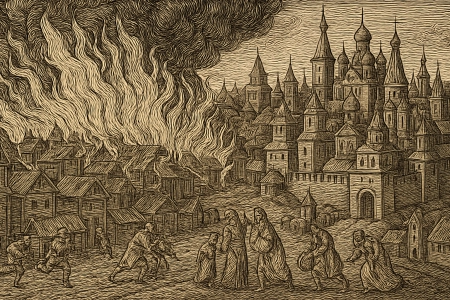
The turning point in Ivan the Terrible dark history came in the 1550s. In 1547, a devastating fire ravaged Moscow, killing thousands and fueling rumors that Ivan’s relatives were to blame. A few years later, Ivan nearly died of illness. While he lay sick, several boyars hesitated to swear loyalty to his young son, convincing Ivan that his nobles were treacherous and waiting for his death.
In 1560, another blow struck: the death of his beloved first wife, Anastasia Romanovna. Ivan believed she had been poisoned by boyars who wanted to unsettle the throne. Whether or not that is true, the suspicion consumed him. His behavior grew increasingly erratic and violent.
From this point on, Ivan the Terrible paranoia and violence became central to his rule. He no longer trusted his advisors, the nobility, or even whole regions of his realm. The reforms of the early years faded into the background as Ivan began to rule through fear.
The Oprichnina Terror: Russia Under the Black Cloak
In 1565, Ivan suddenly announced that he was leaving the throne, blaming the boyars for betrayal. The terrified population and church leaders begged him to return. He agreed — but only on one condition: he would be allowed to rule a special domain under his direct control with absolute power. This new arrangement was called the Oprichnina.
Under the Oprichnina, Russia was effectively split in two:
- Oprichnina lands: Regions directly ruled by the tsar and his handpicked followers, the oprichniki, who wore black and rode black horses.
- Zemshchina: The rest of the realm, still administered by traditional elites but under growing pressure.
The Oprichnina terror became infamous. The oprichniki acted as a kind of secret police and death squad, confiscating estates, expelling families, and carrying out public executions. Merchants, churchmen, and nobles all lived in fear of sudden accusations of treason.
Symbols of Terror: The Dog’s Head and the Broom
Chroniclers and later depictions often describe the oprichniki riding with grim emblems—a dog’s head (to “sniff out” treason) and a broom (to “sweep away” enemies). Whether carried as real objects in every case or amplified by hostile witnesses, the imagery captured the point: the Oprichnina was meant to feel omnipresent, sudden, and unstoppable.
One of the darkest moments came in 1570, when Ivan suspected the wealthy trading city of Novgorod of plotting to defect to a foreign power. His troops descended on the city, launching a brutal purge. Thousands were tortured, drowned, or driven into exile. Entire neighborhoods were destroyed. The massacre of Novgorod remains a symbol of how Ivan the Terrible used terror to rule.
Yet the Oprichnina was not just feared—it was also destabilizing. When Crimean forces struck and Moscow burned in 1571, the shock exposed how terror at home could weaken defense. In the aftermath, the Oprichnina was abolished in 1572 and its forces were folded back into the state, leaving behind a legacy of confiscation, trauma, and deep suspicion between ruler and elites.
This period of mass repression invites comparison with other grim episodes in European and world history, similar to the religious persecutions in the history of the Inquisition and the brutal legends explored in the article on Elizabeth Báthory.
War on All Fronts: The Livonian War and a Bleeding Realm
While terror raged at home, Ivan also launched an ambitious foreign war aimed at securing access to the Baltic Sea. The Livonian War (1558–1583) pitted Russia against powerful neighbors such as the Polish–Lithuanian Commonwealth and Sweden. At first, Russian armies scored victories, but the conflict dragged on and the balance shifted.
The long war devastated the countryside with raids, scorched fields, and mass displacements. Crimean Tatar armies attacked from the south, even reaching and burning parts of Moscow. Combined with the internal chaos of the Oprichnina, the war wrecked the economy, depopulated regions, and undermined the very state Ivan claimed to defend.
The crisis peaked when the Crimean Tatars broke through and set Moscow ablaze in 1571—a catastrophe magnified by divided administration and internal terror. Russia’s recovery included a major defensive victory at Molodi (1572), but the damage was done: the Livonian War still bled the treasury, disrupted trade, and helped push the realm toward the instability that followed Ivan’s death.
In the end, Russia failed to secure a Baltic port, while rivals grew stronger. This outcome stands in stark contrast to the military successes of other 15th and 16th century rulers, such as those examined in the article From Knights to Cannons: The Gunpowder Military Revolution, where new weapons and strategies often brought lasting gains.
A Family Tragedy: The Tsar Who Struck His Own Son
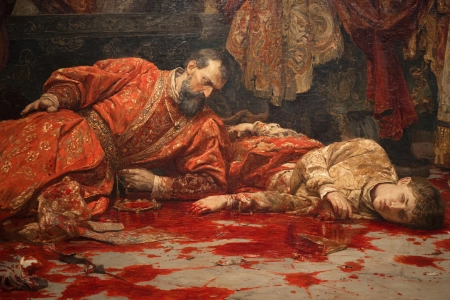
Perhaps the most haunting episode in Ivan the Terrible history is the death of his heir, Ivan Ivanovich, in 1581. Many later accounts describe a violent confrontation in which the tsar struck his son during a rage—an image immortalized in Repin’s famous painting of remorse after the blow. The core fact that the heir died in 1581 is secure, but the exact circumstances are debated: sources vary in detail, and some narratives were shaped by politics, rumor, and later moral storytelling. What is not in doubt is the consequence—Russia lost its most capable successor at the worst possible time.
The death of the capable tsarevich left the weaker Feodor as heir. When Ivan died in 1584, Russia passed to a ruler who lacked his father’s energy and will, and within a generation the country descended into the Time of Troubles — a period of dynastic crisis, foreign intervention, and social breakdown.
For many historians, this tragic end underscores the core of Ivan the Terrible dark history: a ruler who helped create a more powerful state but whose paranoia and cruelty helped to break it soon after.
Legacy: Monster, State-Builder, or Something in Between?
Ivan IV’s legacy remains fiercely debated. Some Russian traditions remember him as a strong leader who defended Orthodox Russia against foreign enemies and internal traitors. Others emphasize the devastation he left behind: ruined towns, depopulated lands, and long-lasting distrust between ruler and ruled.
As with other figures explored on History Prime — from Elizabeth Báthory to the tyrannical emperors of ancient Rome like Caligula — Ivan the Terrible legacy in Russian history forces readers to think about the price of absolute power. Can the expansion of a state ever justify such cruelty? Or does terror simply poison everything it touches, even when wrapped in the language of faith and national greatness?
What is clear is that Ivan IV helped define the pattern of Russian autocracy for centuries to come. Later rulers, whether they sought to imitate or avoid his example, could not escape the shadow of his dark reign. Understanding Ivan means understanding not just one man, but a whole political culture shaped by fear, faith, and force.
FAQ: Ivan the Terrible’s Dark Reign
Why was Ivan the Terrible so feared?
Ivan was feared because he combined absolute power with deep suspicion and extreme violence. The Oprichnina terror, mass executions, and episodes like the massacre of Novgorod showed that no noble, merchant, or churchman was truly safe from the tsar’s anger.
What was the Oprichnina, and why is it so infamous?
The Oprichnina (1565–1572) was a separate domain ruled directly by Ivan IV and enforced by his black-clad oprichniki, a kind of secret police. They seized lands, expelled families, and carried out public executions, making the Oprichnina one of the most notorious parts of Ivan the Terrible dark history.
Did Ivan the Terrible really kill his son?
Most traditional accounts say that Ivan struck his son, Ivan Ivanovich, during a furious argument in 1581 and caused a fatal injury. Some details are debated by historians, but the story reflects the reality of Ivan’s explosive temper and the tragic collapse of his own dynasty.
What were the streltsy, and why do they matter?
The streltsy were early firearm infantry organized as a standing force under Ivan’s state. They strengthened the tsar’s military reach, but over time they also became a political factor in Moscow—proof that building new power structures can create new long-term risks.
What did Ivan the Terrible accomplish?
Ivan expanded Muscovy dramatically by conquering Kazan (1552) and annexing Astrakhan (1556), extending Russian control down the Volga and reshaping the empire’s ethnic and religious landscape. He also pursued legal and administrative reforms early in his reign—even as later policies undermined stability.
What happened after Ivan the Terrible died?
Ivan died in 1584 and was succeeded by his son Feodor, a weaker ruler whose reign left power concentrated among advisors. The succession crisis that followed helped open the door to the Time of Troubles (dynastic conflict, famine, and foreign intervention) in the early 1600s.
How does Ivan the Terrible compare to other dark history figures?
Like other rulers and events in the Dark History section — from the horrors of the Black Death to the legends surrounding Elizabeth Báthory — Ivan IV shows how fear, ideology, and unchecked power can turn politics into terror. His reign remains one of the most striking examples of a dark reign of Ivan the Terrible shaping an entire country’s history.
Sources & References
- Isabel de Madariaga, Ivan the Terrible (Yale University Press, 2006).
- Sergei Bogatyrev, Ivan the Terrible (Routledge, 2019).
- Maureen Perrie (ed.), The Cambridge History of Russia, Volume 1: From Early Rus’ to 1689 (Cambridge University Press, 2006).
- Geoffrey Hosking, Russia and the Russians: A History (Belknap Press, 2001).
- Encyclopaedia Britannica, articles on Ivan the Terrible and the Tsardom of Russia.
- Lumen Learning, World History and Western Civilization modules on Ivan IV and the Tsardom of Russia.
More Articles